Introduction to Digital Fabrication
Introductory courses for architecture and design students approaching digital manufacturing through CNC milling, laser cutting, 3D printing and physical prototyping.
Courses included
- Science, Engineering and Technology Workshop CIEE Global Architecture and Design, IAAC Barcelona / Faculty / 2023-2025 / Bachelor semester course
- Introduction to Digital Fabrication Seminar Master in Advanced Architecture, IAAC Barcelona / Co-faculty with Ricardo Mayor, Shyam Zonca, Miguel Guerrero / 2023-2024 / First-term seminar
- Skills, Methods and Tools Harbin Institute of Technology, Shenzhen / Co-faculty with Ricardo Mayor / 2023 / One-week intensive
Keywords
Digital fabrication, computational design, 3D printing, CNC milling, laser cutting, prototyping.
Overview
Teaching focuses on how digital models become physical things: components, prototypes, assemblies and construction systems.
Courses introduce fabrication as a design process, where geometry, material behaviour and machine constraints shape the final outcome.
From Model to Prototype
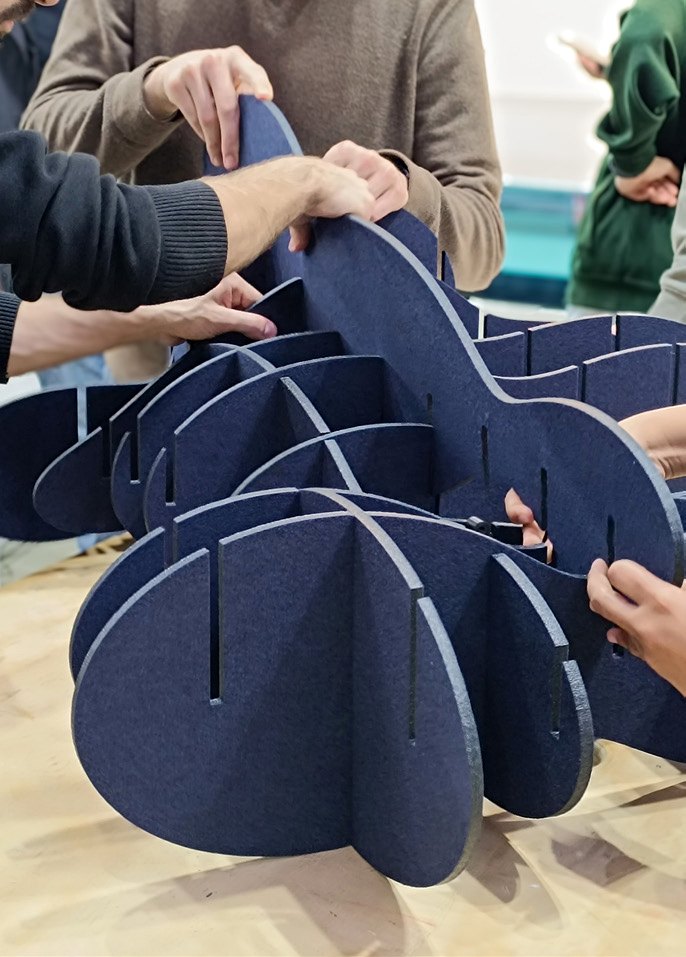
Students move from design intent to physical prototypes, learning how to prepare geometry, generate fabrication files and test their ideas through making. The goal is to understand the full passage from a digital model to something that can be produced, assembled and evaluated.
Material and Machine Logic
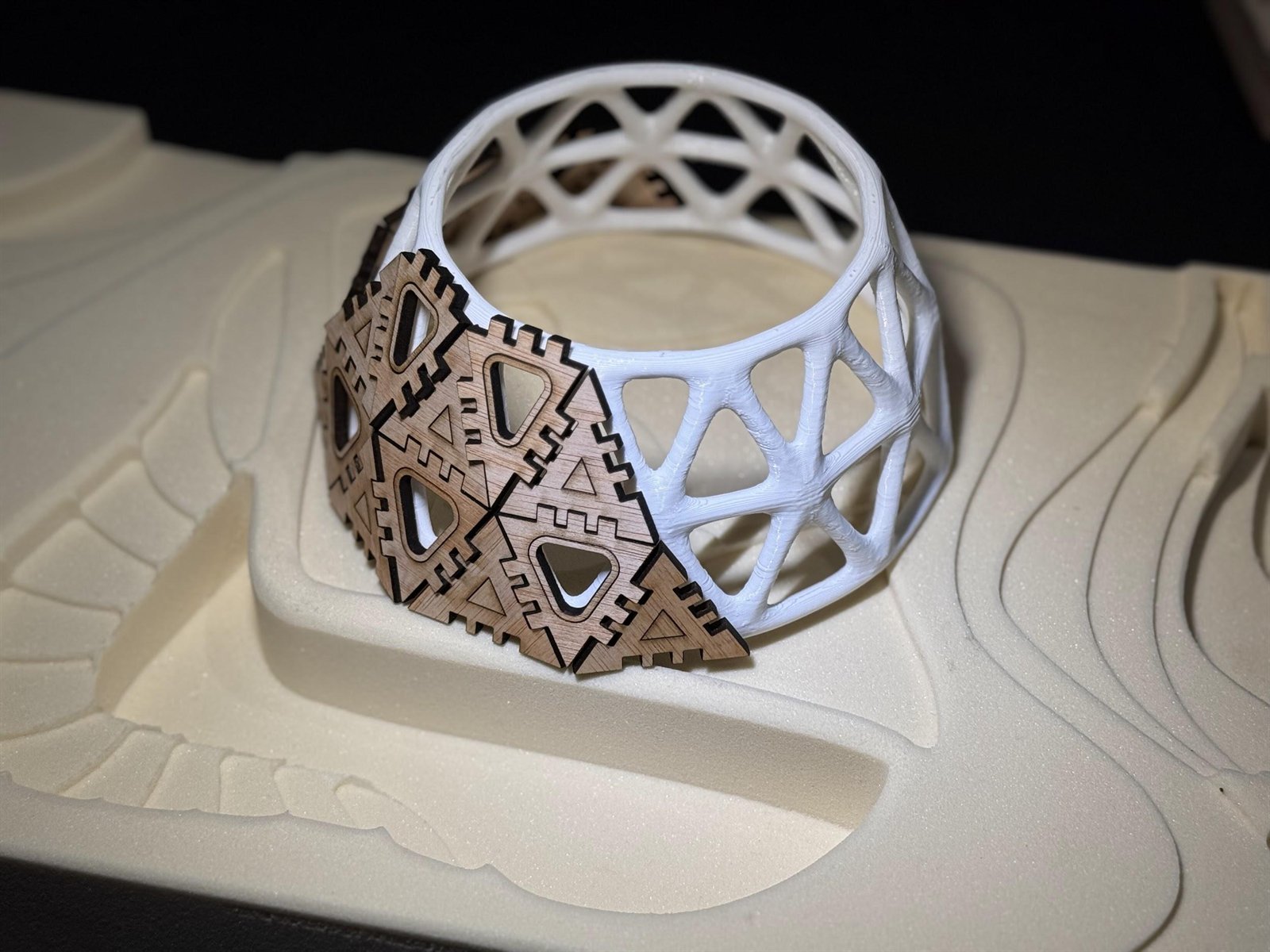
Each exercise is shaped by real fabrication limits: material size, tool access, layer logic, tolerances, machine time and assembly conditions. These constraints are treated as part of the design process, not as technical problems to solve at the end.
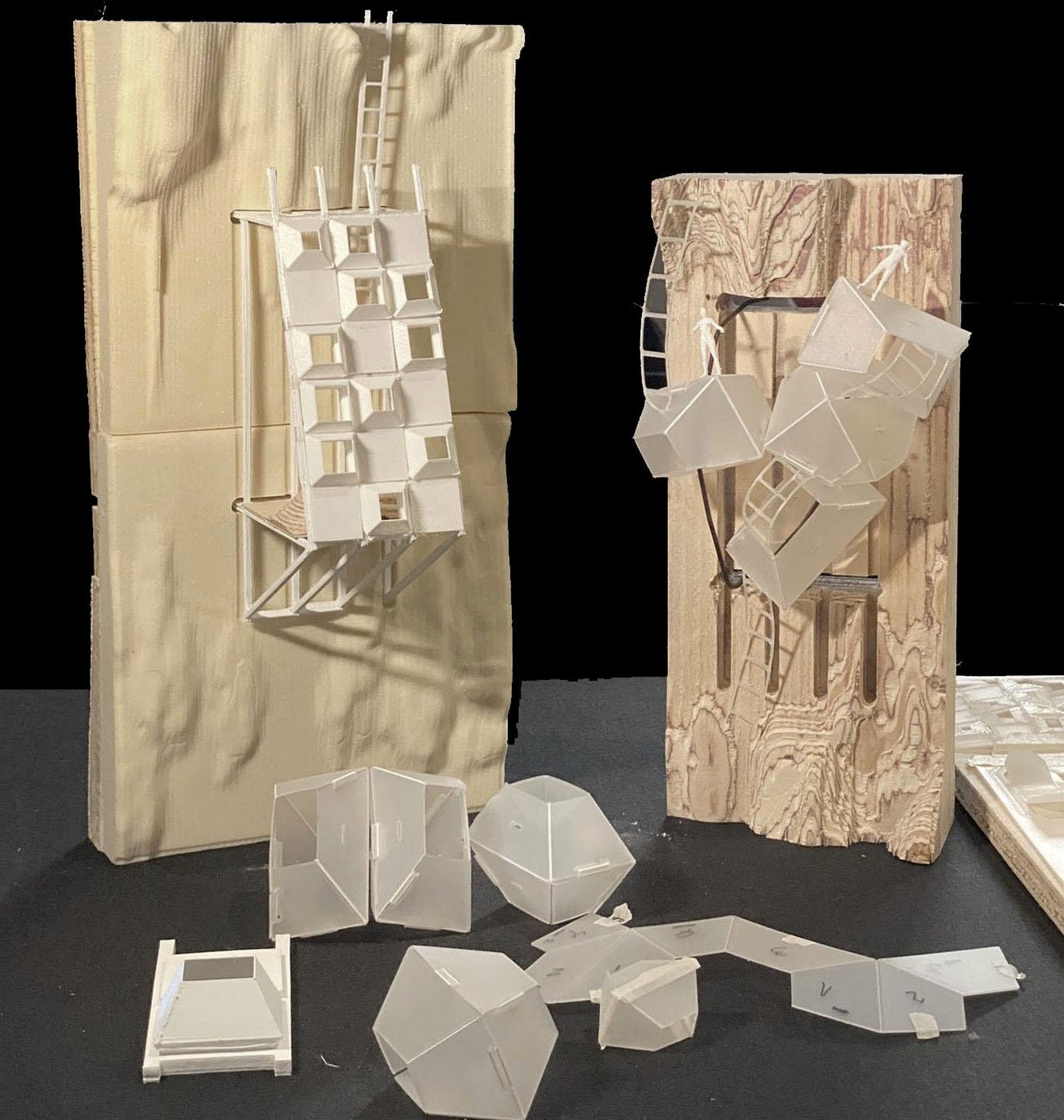
Computational Design Literacy
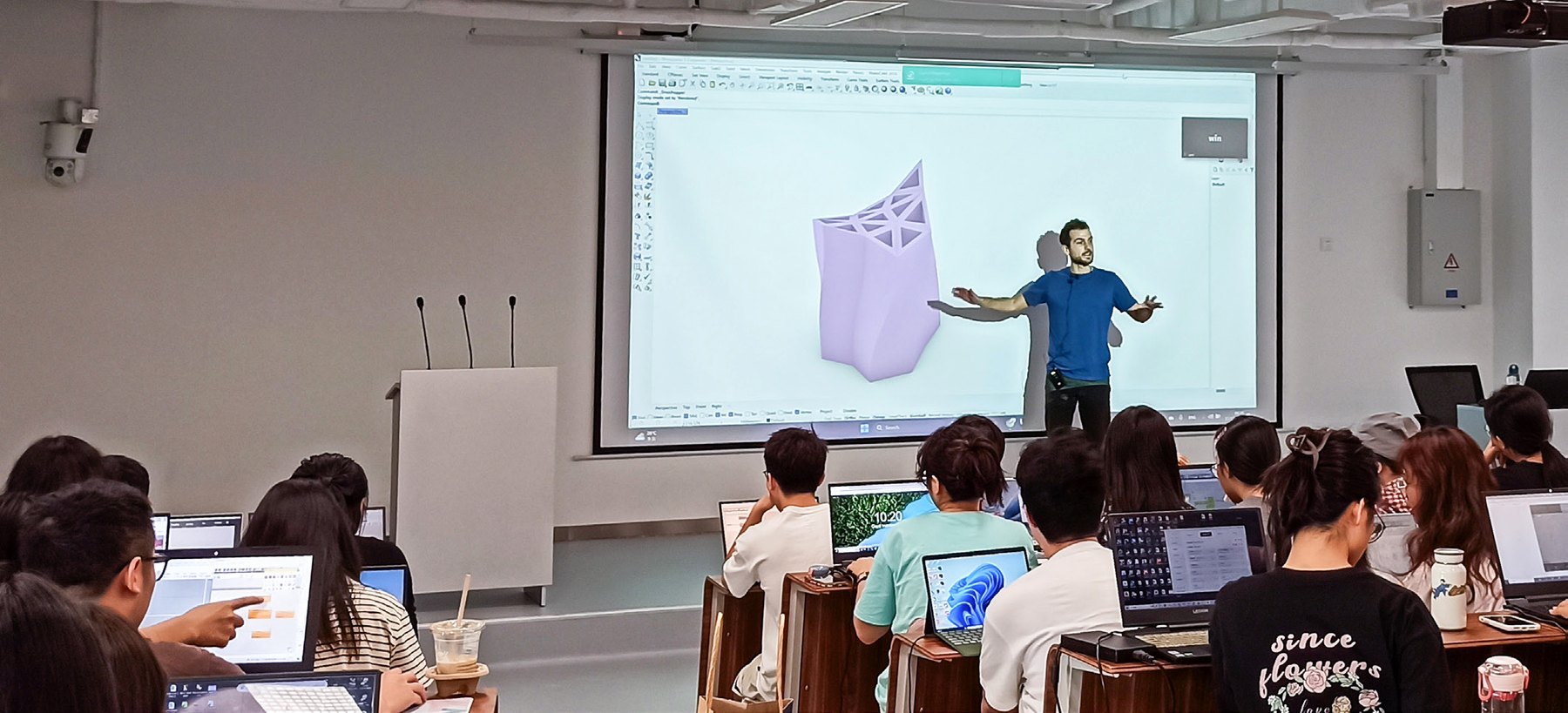
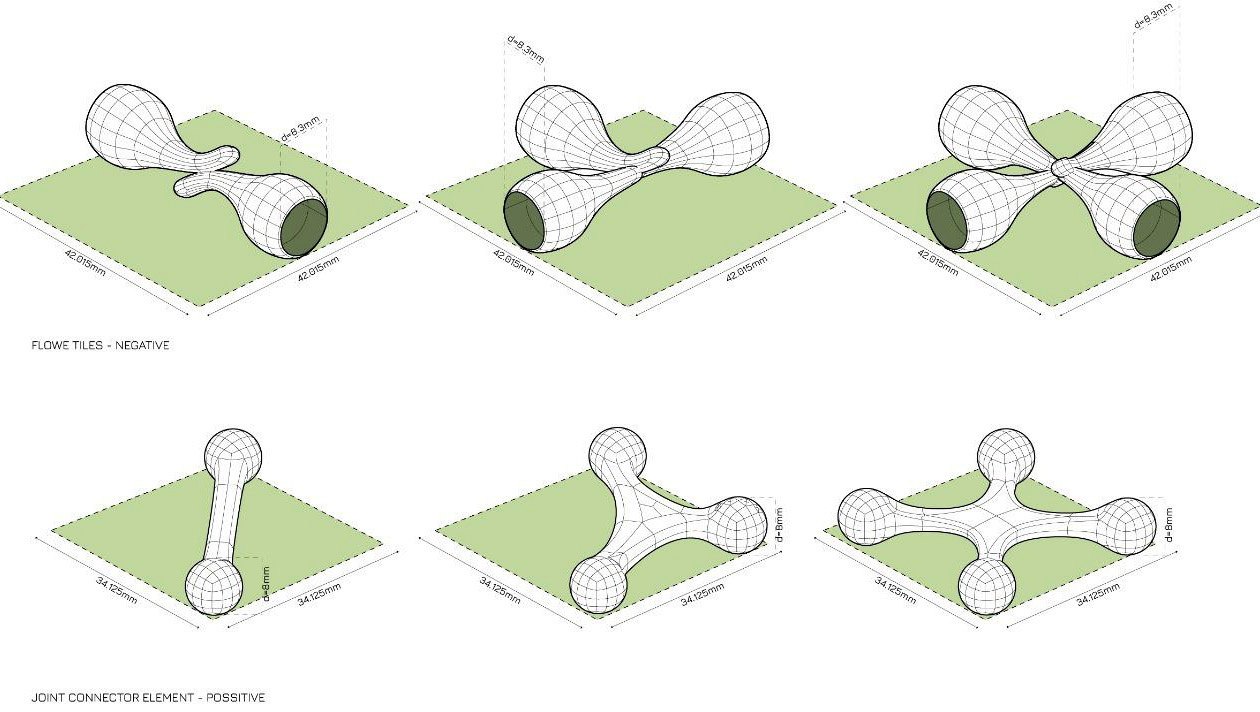
Computational tools are introduced as a way to organise geometry, rules and fabrication data. Students learn to use digital models not only as representations, but as working systems that can support production.
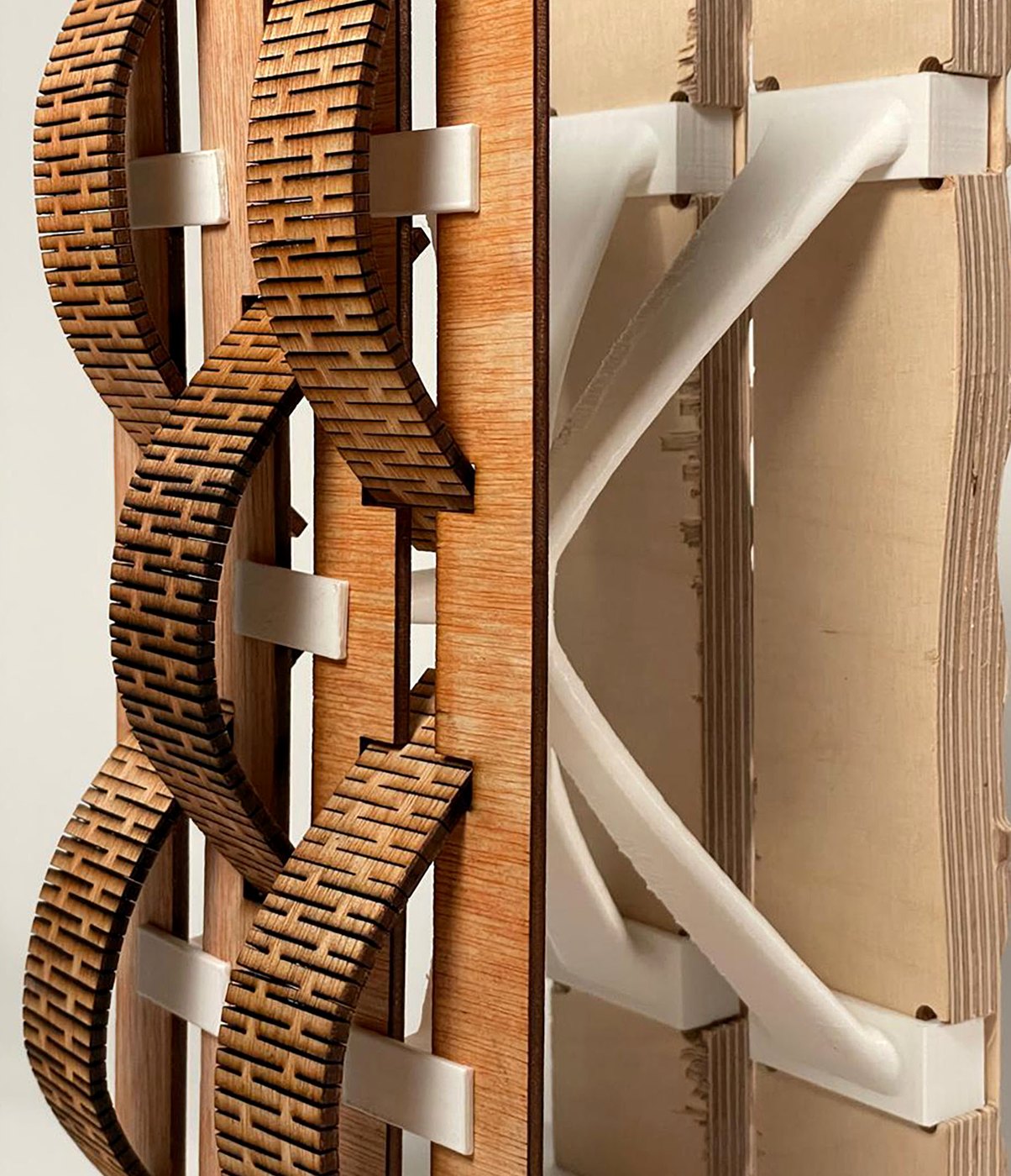
Teaching Format
Courses combine short lectures, software tutorials, fabrication sessions, reviews and hands-on prototyping. The FabLab is presented as a shared production environment, where preparation, safety, documentation and collective responsibility are part of the learning process.