HexBox Canopy
A rapid assembly segmented timber shell with wedge joints.
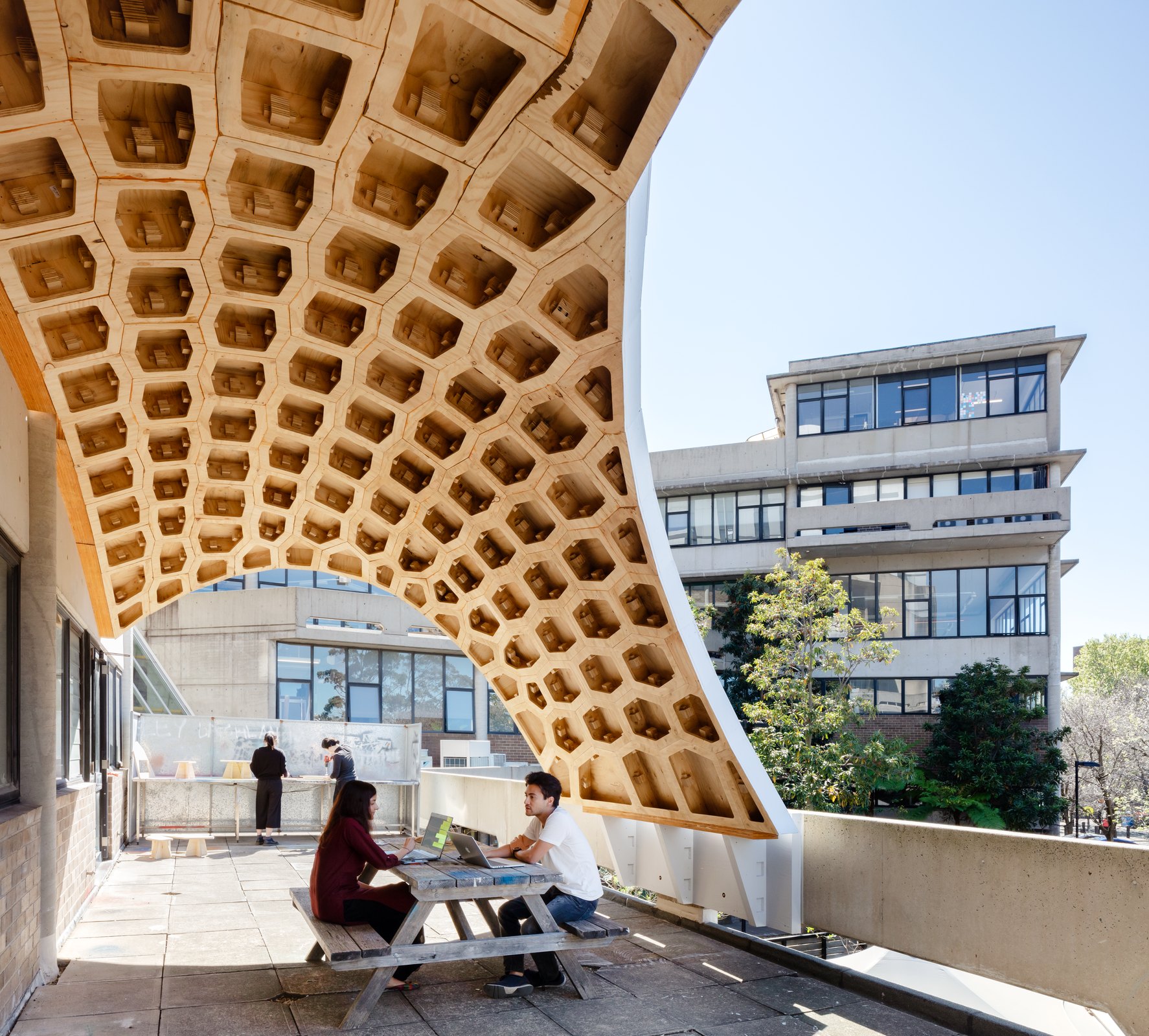
HexBox Canopy is an experimental timber shell made from prefabricated plywood box modules. The project explores how digital fabrication and smart assembly logic can make complex lightweight structures easier to build, transport and disassemble.
Research Premise
The project starts from a longstanding architectural question: how can shell structures cover space efficiently while avoiding the heavy temporary formwork usually required to build them?
HexBox Canopy tests a timber alternative based on prefabricated plywood boxes. The result is a 45 m² canopy made from 201 box modules and 1531 timber segments.
Timber Box System
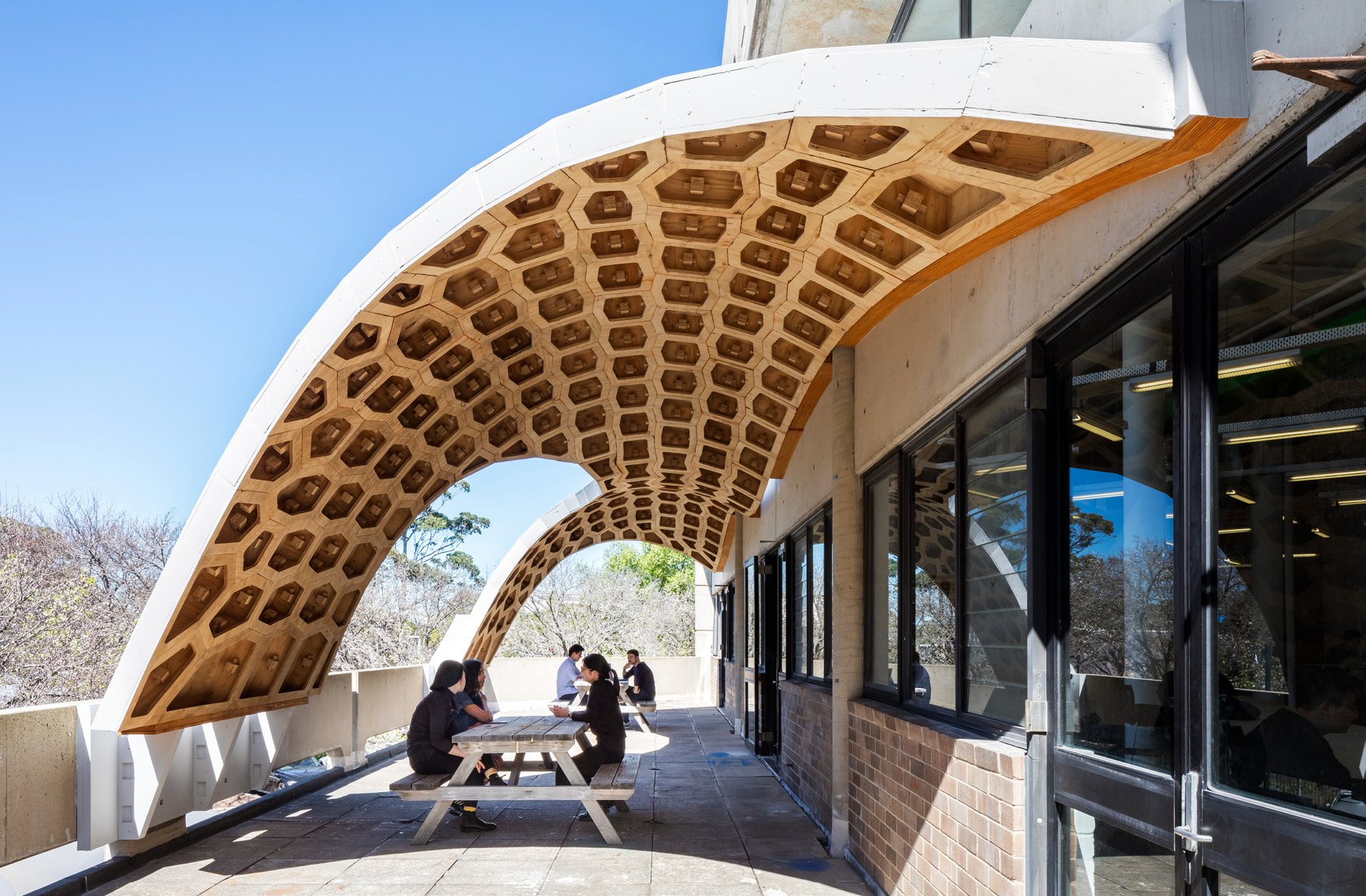
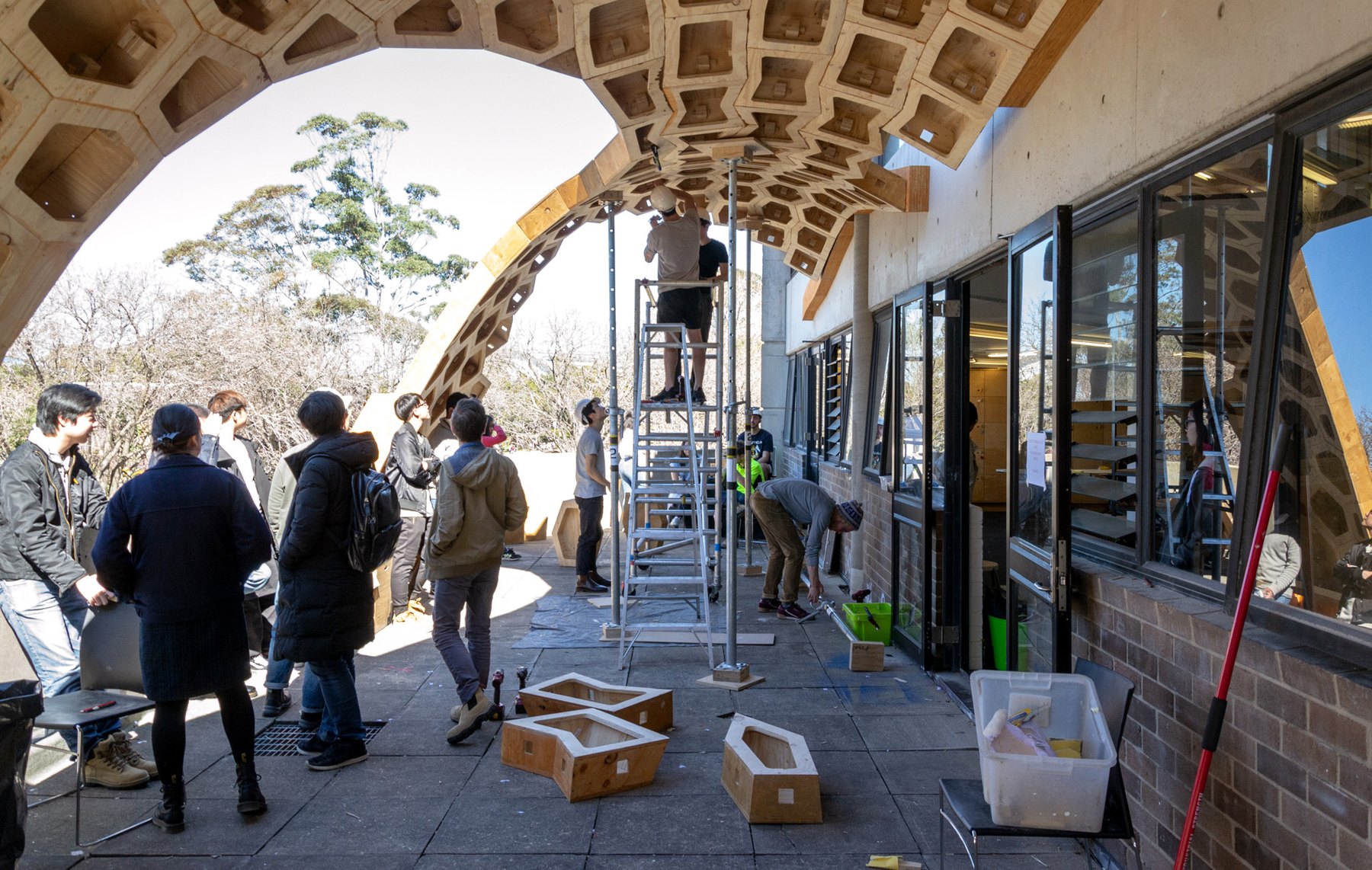
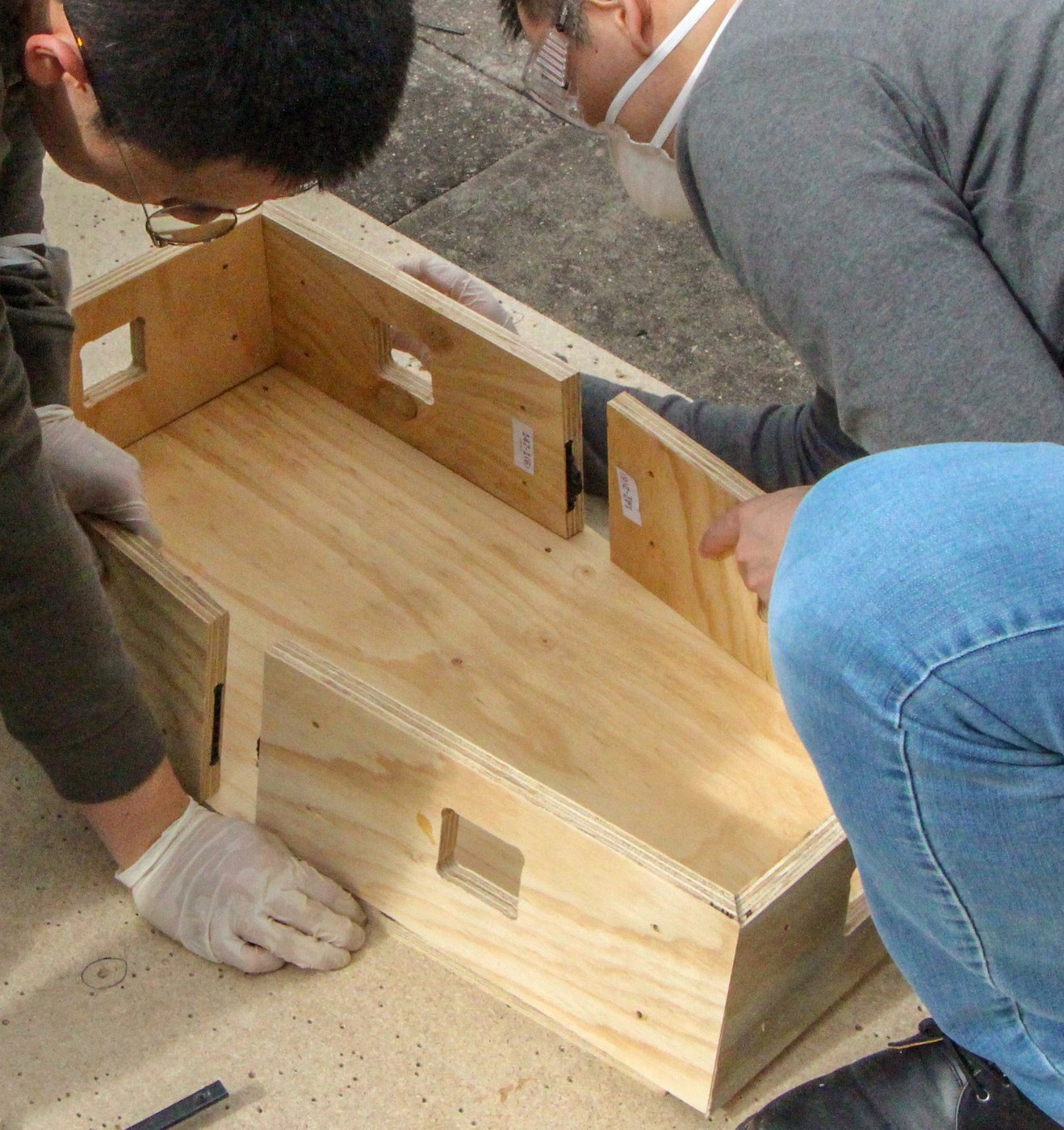
The shell is built from hexagon-shaped box modules, each assembled from plywood plates.
Together, the boxes create a lightweight curved surface that can be prefabricated, transported and assembled on site with limited temporary support.
Wood-Only Joints
The main load-bearing structure avoids metal fasteners between the box modules.
Instead, diagonal timber wedges connect the boxes, pulling them together during assembly and helping close small gaps caused by fabrication or positioning tolerances.
The wedge connectors are produced from plywood off-cuts generated while cutting the main plates.
This turns leftover material into a structural connection system and reduces the need for additional hardware in the shell.
Digital Design and Fabrication
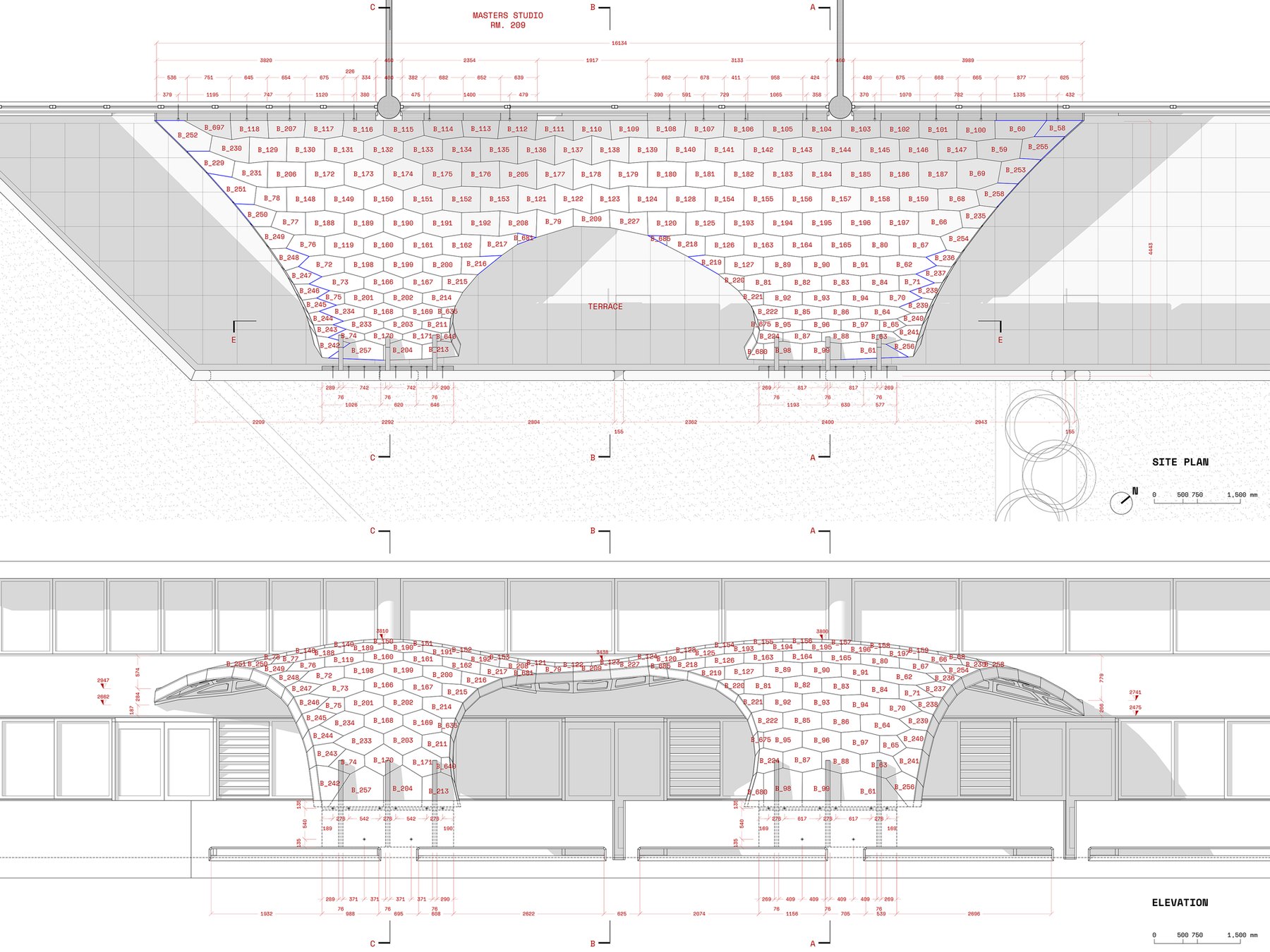
The project relies on computational design and digital fabrication to manage a large number of different plates, angles and joints.
The digital model defines not only the final geometry, but also the fabrication data, labelling and assembly information needed to build the canopy.
Assembly
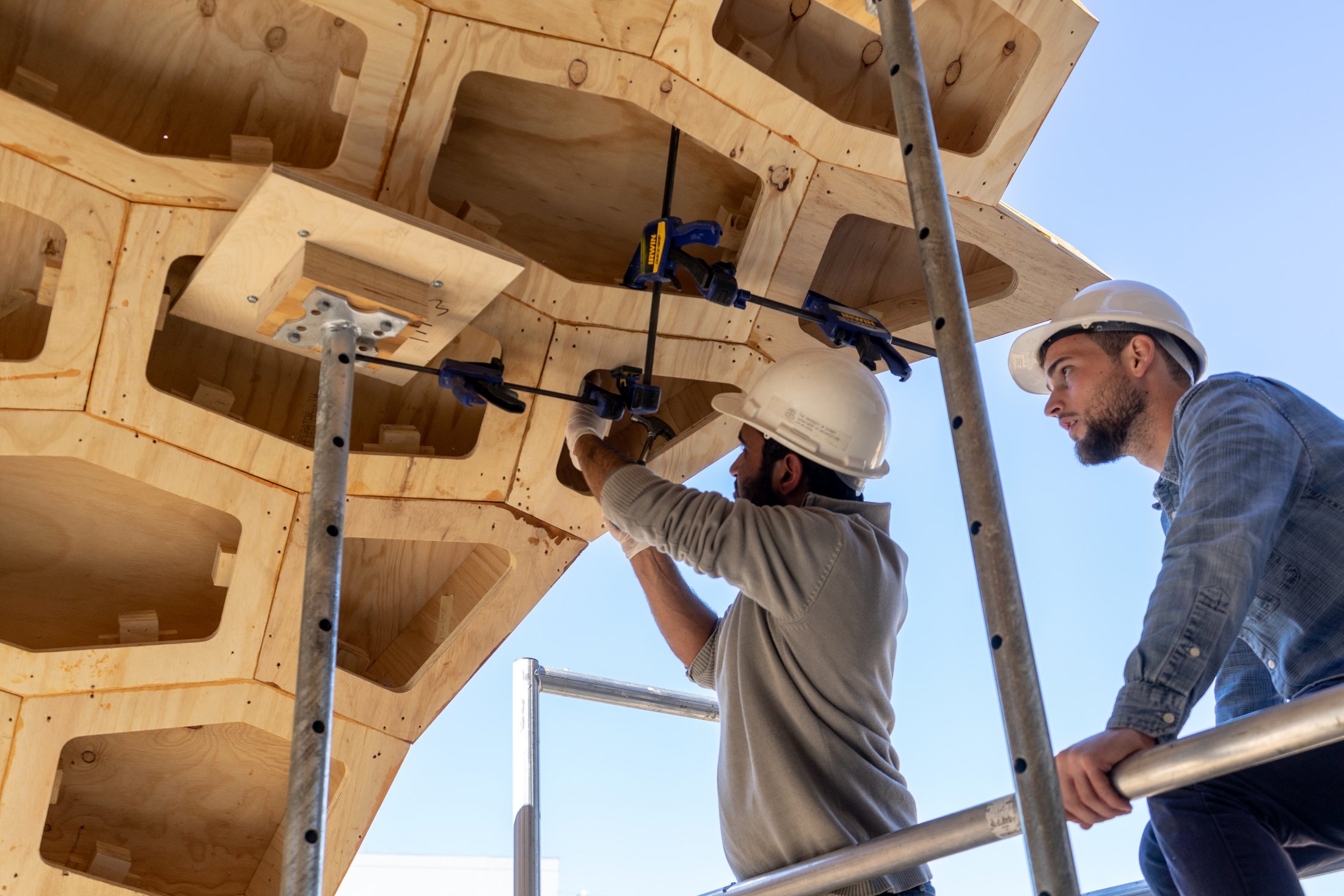
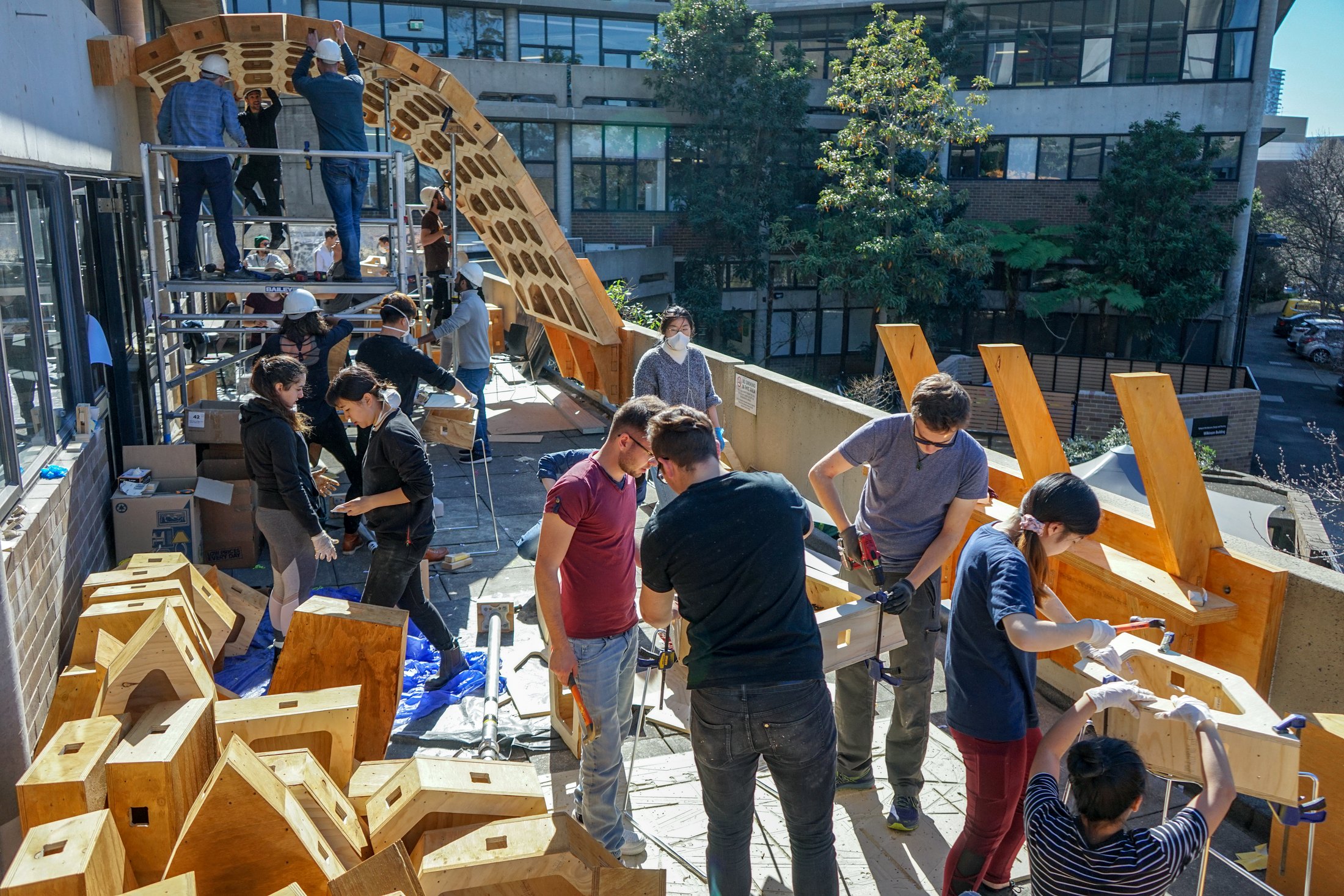
The canopy is designed as a prefabricated system that can be assembled through an ordered sequence of timber modules.
The geometry of the parts and their integrated joints guide positioning and alignment, making assembly part of the design logic rather than a separate construction problem.
Credits
Digital Timber Construction Group, University of Kaiserslautern; University of Sydney School of Architecture, Design and Planning.
Christopher Robeller, Eduardo De Oliveira Barata, Enrico Valentino Tagliaboschi, Felix Schmidt-Kleespies.
Rodney Watt, Lynn Masuda and the University of Sydney Design Modelling and Fabrication Lab.
Proceedings of the IASS Annual Symposium 2020/21 and the 7th International Conference on Spatial Structures. Recipient of the Tsuboi Award.